
What's Behind Your Walls? A Homeowner's Guide to Safe TV Mounting

What is behind the drywall matters just as much as the television and bracket. Learn how wood studs, metal studs, concrete, masonry, and fireplace walls affect a safe TV mounting installation.
Why Wall Construction Matters When Mounting a TV
A finished wall may look simple, but the material behind it determines how a TV mount must be attached. Wood studs, light-gauge steel framing, poured concrete, concrete block, brick, and layered fireplace walls all require different tools, fasteners, and installation methods.
The television's weight is only part of the calculation. Mount type, extension, stud spacing, wall condition, bracket design, and anchor placement also affect the load. A full-motion mount creates more leverage on the wall when the screen is extended than a fixed bracket holding the same TV close to the surface.
That is why professional TV mounting is not a one-size-fits-all service. The wall should be evaluated before selecting fasteners or drilling holes.
1. Wood Stud Walls
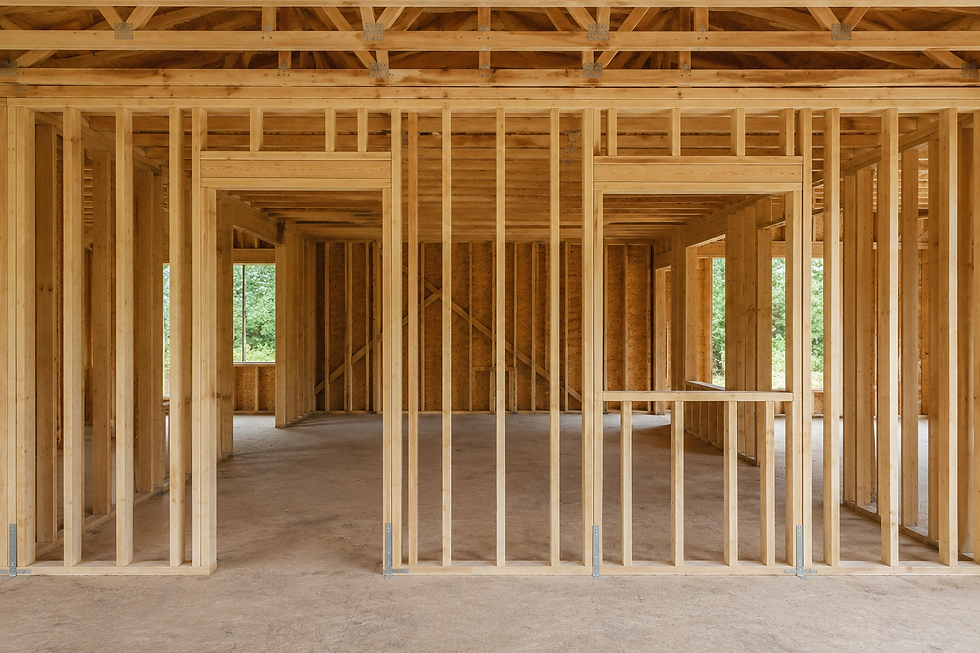
Wood framing is common in single-family homes, townhomes, and many low-rise residential buildings in the United States. Vertical wood studs support the drywall and provide strong attachment points when the correct fasteners are installed properly.
Common Wood Stud Spacing
Many walls use studs spaced 16 inches on center, while some assemblies use 24-inch spacing. Older homes, remodels, nonstandard partitions, and walls around doors, windows, plumbing, or fireplaces may have different layouts.
Stud spacing should be measured instead of assumed. The mount's wall plate must also be compatible with the confirmed spacing and intended TV position.
Why Wood Framing Is Widely Used
It is readily available and practical for residential construction.
It is easy to modify during many renovation projects.
Wood provides a solid substrate for properly sized structural fasteners.
Different framing layouts can accommodate doors, windows, utilities, and architectural features.
Safe TV Mounting on Wood Studs
The wall plate should be secured according to the TV mount manufacturer's instructions. Depending on the bracket, television, stud layout, and rated hardware, the installation may require one stud, two studs, or a wider structural backing solution.
For large screens and full-motion mounts, using the required structural attachment points is especially important because extending the TV increases the force applied to the wall.
Drywall anchors or toggle bolts should not be added as an improvised substitute for missing structural attachment points. If a mount is designed for a combination of stud and approved hollow-wall anchors, every fastener must match the manufacturer's specified type, quantity, placement, and load requirements.
2. Metal Stud Walls

Cold formed steel studs are common in offices, schools, medical facilities, hotels, high-rise interiors, and many multifamily or commercial buildings. They are also used in some residential construction.
However, the type of building does not prove what is inside a particular wall. A high rise may combine poured concrete, concrete masonry, steel framing, furring channels, and other wall assemblies. The actual substrate must be verified at the mounting location.
Why Metal Studs Are Used
Steel framing is noncombustible.
It is lightweight and dimensionally consistent.
It does not shrink, split, or warp like some natural materials.
It is widely used for non load bearing interior partitions and can also be engineered for structural applications.
The performance of a fire rated or structural wall depends on the complete tested assembly not simply the presence of metal studs.
Safe TV Mounting on Metal Studs
Metal studs are hollow and available in different widths, thicknesses, and structural grades. Standard wood lag screws are not automatically appropriate for thin steel framing.
Possible attachment methods include:
A manufacturer-approved steel-stud mounting kit
Rated toggle or snap-toggle anchors installed through the steel stud
Structural backing installed between studs
A mounting plate designed to distribute the load
Another engineered attachment method approved for the wall and bracket
The correct method depends on the stud gauge, drywall layers, fastener rating, TV weight, bracket type, and manufacturer instructions.
Some steel-stud kits are approved only for fixed or tilting mounts, and some manufacturers specifically advise against using their full-motion brackets on steel studs without additional reinforcement. For that reason, a full-motion installation should never be approved based only on the anchor's advertised weight capacity.
Drill bits and tools should be selected for the actual steel thickness and chosen fastening system. A cobalt bit may be useful in some applications, but it is not a universal requirement for every metal-stud installation.
3. Concrete, Block, Brick, and Masonry Walls
Solid walls can provide excellent support, but concrete and masonry are not interchangeable materials. Poured concrete, hollow concrete block, solid brick, hollow brick, natural stone, and stone veneer can require different anchors and drilling techniques.
What a Masonry Installation May Require
A hammer drill or rotary hammer appropriate for the substrate
The correct diameter and depth of masonry bit
Mechanical or adhesive anchors approved for the base material
Careful hole cleaning and anchor installation
Awareness of rebar, embedded utilities, joints, and hollow cells
Dust collection or another suitable silica-exposure control method
An anchor intended for solid concrete may not be suitable for hollow block or brick. Likewise, decorative tile, stone veneer, or a thin facing material should not automatically be treated as the structural support.
The mount must connect to the load-bearing substrate without cracking the finish or exceeding the anchor's installation limits.
4. Fireplace and Feature Walls
Fireplace walls deserve additional inspection because the visible surface may conceal several layers. A single installation could include wood or steel framing, cement board, tile, stone veneer, masonry, a chimney, a metal firebox, insulation, electrical wiring, and a recessed media enclosure.
Before mounting above or near a fireplace, consider:
The actual structural substrate behind the finish
Fireplace and television manufacturer clearances
Heat exposure at the proposed TV position
Mantel height and viewing angle
Chimney, vent, or flue location
Electrical and low voltage cable routes
Whether the finish can be drilled without cracking or damage
A stud finder reading alone may not provide enough information for a layered fireplace assembly. When conditions are unclear, further inspection or documentation may be required before drilling.
5. Can a TV Be Mounted on Drywall Alone?
Most conventional TV mounts are designed for attachment to wood studs, approved steel stud systems, solid concrete, or concrete block. Their instructions often state that they should not be installed into drywall alone.
However, specially engineered drywall TV mounts do exist. These products use a specific wall plate, fastener pattern, and rated installation method. They are generally designed for particular TV sizes, weights, drywall conditions, and fixed or low-profile applications.
The important rule is simple: never assume that a traditional TV bracket becomes a drywall rated mount by adding more generic anchors. Use drywall only mounting only when the complete system is explicitly designed and rated for it, and follow every manufacturer requirement.
Full motion mounts create outward and twisting forces that make wall construction especially important. A drywall-only solution should not be used unless the specific product and wall assembly are approved for that application.
6. How Installers Identify the Wall Type
No single detection method is perfect. A careful wall evaluation may combine:
Electronic stud finding and material detection
Magnetic fastener location
Measurement from known framing references
Inspection around outlets or existing openings when appropriate
Review of building plans or renovation records
Small test holes in an approved location
Assessment of wall thickness, sound, and surface material
Installers should also consider possible electrical wiring, plumbing, gas lines, fire blocking, ductwork, and other hidden conditions before drilling.
Wood Studs vs. Metal Studs vs. Concrete
Feature | Wood studs | Metal studs | Concrete or masonry |
Common locations | Many houses, townhomes, and low rise residences | Commercial interiors, offices, multifamily buildings, and some residences | High rises, basements, exterior walls, commercial spaces, and masonry buildings |
Typical attachment | Structural screws or lag bolts approved for the mount | Rated steel stud hardware, toggles through studs, backing, or engineered attachment | Mechanical or adhesive anchors approved for the specific base material |
Main variable | Stud size, spacing, condition, and wall plate alignment | Stud gauge, drywall layers, anchor type, backing, and mount movement | Solid vs. hollow material, anchor type, embedment depth, and edge distance |
Full motion concern | Greater leverage requires correct structural attachment | Thin studs can twist; reinforcement or a different mount may be required | Anchor design and substrate condition must resist increased leverage |
Special tools | Stud detection, drill/driver, and appropriate bits | Metal compatible bits and installation tools for the specified anchors | Masonry drilling equipment, approved bits, hole cleaning, and dust control |
Not sure what is behind your wall?
How LECSER Plans a Safe TV Installation
LECSER evaluates the television, bracket, wall, viewing position, and cable route before selecting the installation method.
The process may include:
Confirming the TV size, weight, and VESA pattern
Reviewing the mount's rated capacity and approved wall types
Identifying the likely wall structure and verifying attachment points
Checking the required stud spacing or masonry substrate
Considering leverage from tilting or full-motion brackets
Selecting fasteners approved for the wall and mount
Planning around utilities, fireplaces, finishes, and cable routes
Confirming level, alignment, movement clearance, and cable slack after installation
If the wall does not support the requested bracket safely, the solution may involve a different mount, structural backing, a mounting panel, another TV location, or additional evaluation.
Frequently Asked Questions
Can a TV be mounted on a metal stud wall?
Yes, when the television, bracket, steel framing, drywall layers, and fastening system are compatible. Use hardware specifically approved for steel studs and follow the mount manufacturer's instructions. A full-motion mount may require reinforcement or may not be approved for that wall.
How can I tell whether my wall has metal studs?
Building type can provide a clue, but it is not proof. Electronic detection, magnetic fastener location, inspection at openings, building documentation, and careful test methods can help identify the wall assembly.
Is it safe to mount a TV on drywall alone?
Only when using a complete mounting system specifically designed and rated for drywall-only installation. Most conventional brackets require wood studs, an approved steel-stud system, concrete, or concrete block.
What if there is concrete behind the drywall?
The wall may use furring strips, steel framing, an air gap, or drywall attached close to the concrete. The installer must determine the wall depth and select an attachment method that reaches an approved structural substrate without crushing the wall finish.
Are toggle bolts enough for a full-motion TV mount?
Not automatically. The answer depends on the mount instructions, anchor rating, wall assembly, stud gauge, TV weight, fastener pattern, and leverage created when the screen is extended. Many full-motion installations require structural attachment or reinforcement beyond generic toggle anchors.
Can LECSER mount a TV on brick or stone?
Many brick, concrete, block, and stone installations are possible after the actual substrate and finish are evaluated. The correct bit, anchor, embedment, edge distance, and dust-control method depend on the material and wall condition.
Ready for a Secure TV Installation?
Avoid choosing fasteners based on appearance or assumptions about the wall. LECSER can evaluate the installation area and recommend a mounting method appropriate for the television, bracket, and confirmed wall structure.
This article provides general information. Installation requirements vary by product, wall assembly, building rules, and local code. Follow the current instructions for the television, mount, and fastening system used on the project.


Comments