
What Is the Ideal Height for Mounting a TV?

Updated: Aug 23
Learn how seating position, screen size, viewing distance, and room layout affect TV mounting height and how to create a setup that is comfortable, balanced, and enjoyable to watch.
Finding the Best TV Mounting Height
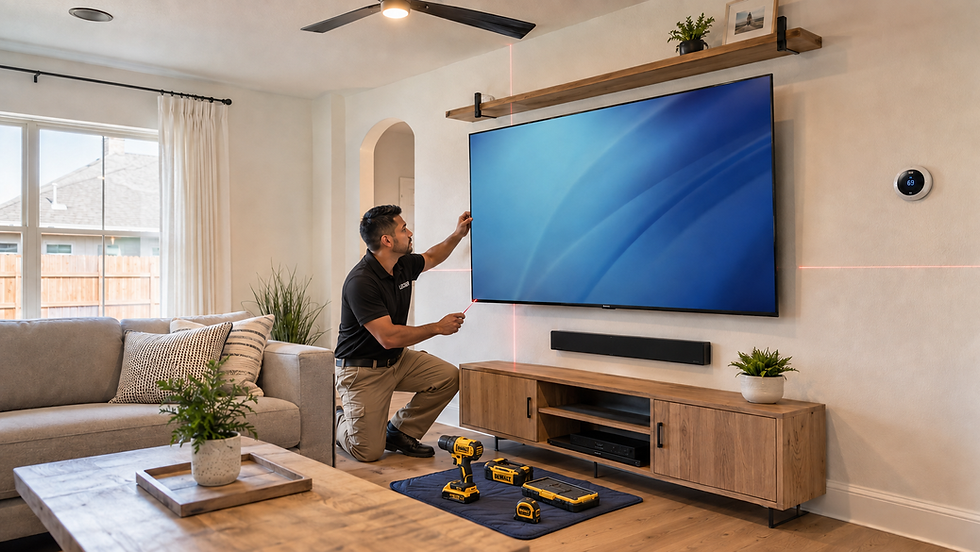
For most rooms, the best starting point is straightforward: place the center of the television close to the seated viewer's eye level. In a typical living room, this is often about 42 inches from the floor to the center of the screen.
That number is a guideline, not a universal rule. The ideal position also depends on the height of your sofa or bed, the size of the television, viewing distance, furniture below the screen, and how the room is used.
At LECSER, we evaluate the complete space before recommending a mounting height. We consider the primary seating area, screen size, wall type, furniture, soundbars, natural light, household needs, and whether a fixed, tilting, or full-motion mount will provide the best result.
The goal is not simply to place a TV on the wall. It is to create a clean installation that looks balanced and feels natural every time you watch.
Why TV Height Affects Comfort
The television is often one of the main focal points in a living room, bedroom, or entertainment area. Its position influences both the appearance of the space and the comfort of everyone watching.
When a TV is mounted too high, viewers may have to raise their chins and hold their necks at an uncomfortable angle. A screen installed too low can conflict with furniture, soundbars, decorations, or the visual balance of the wall.
The right position lets your head remain relaxed while your eyes naturally meet the center area of the screen. This becomes especially important during long movies, sporting events, gaming sessions, and streaming marathons.
The installation should also work from the main sofa, recliners, side chairs, and any other regularly used viewing positions. Careful planning should happen before drilling begins.
Begin With Seated Eye Level
Sit in your usual viewing position and look naturally straight ahead. The center of the screen should be close to that line of sight. For many adults on a standard sofa, this point is approximately 42 inches above the floor.
This measurement applies to the center of the TV, not its bottom edge. Because televisions have different heights, the bottom edge of a 55-inch model will not sit at the same height as that of a 65-inch or 85-inch screen.
A useful starting calculation is:
Seated eye level - half the TV's height = approximate bottom-edge height
Many homeowners initially think an eye level installation looks lower than expected, particularly if they are accustomed to seeing televisions above fireplaces or tall cabinets. In everyday use, however, looking mostly forward is generally more comfortable than repeatedly tilting the head upward.
Choosing Between Fixed, Tilting, and Full Motion Mounts
The bracket can affect viewing comfort just as much as the mounting height. Each type serves a different purpose:

Fixed mount: A slim, low-profile option for a TV positioned at a comfortable height with seating directly in front of it. It does not allow adjustments for glare or side viewing.
Tilting mount: Angles the screen downward, making it useful for higher installations and helping reduce some reflections from windows or overhead lights.
Full motion mount: Extends and swivels the television. It works well in wide rooms, corners, bedrooms, or spaces with off-center seating.
Unsure which bracket fits your room?
When Mounting the TV Higher Makes Sense
Eye level is not always possible. A fireplace mantel, dresser, media console, built in cabinet, tall soundbar, or the way people use the room may require a higher position. A higher installation is not necessarily wrong, but it needs a carefully planned viewing angle.
A tilting mount can direct the screen toward the seating area when the television must sit above eye level. A full-motion mount adds the ability to extend and turn the screen, which can help when viewers sit in different parts of the room.
Clearance for Furniture, Soundbars, Mantels, and Decor
Before selecting the final height, measure everything that will be placed below the television. This may include a console, dresser, mantel, soundbar, floating shelf, picture frames, plants, or seasonal decorations.
Soundbars: A gap of approximately 4 to 5 inches may be enough in many installations, depending on the soundbar's dimensions, controls, and cable route. The spacing should allow the equipment to function properly while keeping visible wiring to a minimum.
Mantels and decorations: If frames, candles, vases, or other objects will be displayed below the TV, consider 8 to 9 inches or more, depending on their height. If this pushes the screen upward, a tilting or full-motion mount may improve the viewing angle.
These measurements are general planning guidelines. The final clearance should be based on the actual equipment and layout.
Recommended TV Height by Room
Living room or family room: Keep the center of the screen near seated eye level whenever possible. The 42 inch guideline is most useful here, although the sofa and screen dimensions should determine the final measurement.
Bedroom: A television viewed from bed often needs to be slightly higher because the viewer's position and eye line are different. A tilting mount can direct the screen downward, while a full motion mount can help when the bed is not centered on the wall.
Media room, game room, or entertainment area: A higher center point sometimes around 57 to 60 inches may work when viewers use bar stools, stand, play pool, or sit in multiple rows. Visibility throughout the room is the priority.
Fireplace wall: Mantel height often determines the available position. Consider heat exposure, wall construction, wiring, soundbar placement, and viewing angle before proceeding. A tilting or full motion mount may improve comfort when the TV must sit high.
Children's room: Balance visibility with safety. The television and cables should remain secure and out of easy reach. In rooms with bunk beds, check the viewing angle and safe clearance from both levels.
Account for Glare and Side Viewing
Height is only one part of a comfortable installation. Windows, lamps, ceiling fixtures, and direct sunlight can create distracting reflections. Adjusting the screen with a tilting or full-motion mount may reduce glare and improve daytime viewing.
The seating layout matters as well. A fixed or tilting mount may be sufficient when the sofa is directly in front of the TV. A sectional, side chairs, an off center bed, or several viewing zones may benefit from a full motion mount that can turn toward different parts of the room.
Wall Structure and Installation Safety
A polished installation must also be structurally secure. The bracket needs to be attached using hardware appropriate for the wall and load, whether the surface contains wood studs, metal studs, brick, concrete, or another suitable structural material.
Drywall alone should not be assumed to support a heavy television. The TV weight, mount specifications, wall construction, anchor rating, and attachment points must all be considered.
Before drilling, an installer should identify the wall structure and account for possible electrical lines, plumbing, insulation, or other concealed obstacles. Fireplace walls, tile, stone, masonry, and metal studs often require additional planning and specialized hardware.
If cables will be concealed, use an appropriate in wall wiring and power solution. A standard TV power cord should not simply be routed inside the wall unless it is specifically rated and installed in accordance with applicable requirements.
How LECSER Helps You Choose the Right Height
LECSER helps homeowners select a mounting position that fits the room instead of relying on a single measurement. We review the viewing area, items below the television, wall construction, bracket type, and cable route before completing the installation.
Whether the project involves a living room, bedroom, family room, or open concept space, the objective is the same: a secure, comfortable installation with a clean and balanced appearance.
Frequently Asked Questions
What is the best height for mounting a TV?
Start by placing the center of the screen near seated eye level, often around 42 inches above the floor. Then adjust for the television's size, seating height, furniture, viewing distance, and room use.
Can a TV be mounted above eye level?
Yes. When furniture, a mantel, or the room layout requires a higher position, a tilting or full motion mount can help direct the screen toward the viewing area.
How much space should be left between a TV and a soundbar?
Approximately 4 to 5 inches works for many setups, but the ideal gap depends on the soundbar's size, controls, ventilation needs, brackets, and cable route.
How much clearance is needed above a mantel or dresser?
If you plan to display decorations below the screen, allow around 8 to 9 inches or more based on the height of those items. Also consider the TV's viewing angle and any heat or equipment requirements.
Which TV mount is best: fixed, tilting, or full-motion?
A fixed mount offers the cleanest profile for centered, eye level viewing. A tilting mount is useful for higher placements or glare, while a full motion mount works best for corners, bedrooms, wide rooms, and off-center seating.
Ready to Mount Your TV at the Right Height?
Avoid guesswork and create a setup designed for your room.


Comments