
Professional TV Mounting Service: More Than Hanging a Screen

Updated: Aug 23
A professional TV mounting service does more than attach a television to a wall. Discover how thoughtful placement, secure mounting, wire concealment, device integration, and finish focused workmanship create a cleaner and more comfortable entertainment space.
A Professional TV Mounting Service Is About the Complete Result
A television is often the visual center of a living room, bedroom, office, or entertainment space. It is where families gather for movie nights, sports, streaming, gaming, and everyday relaxation. Because the screen has such a strong presence in the room, its installation should look intentional not like a bracket and a bundle of cables were added as an afterthought.
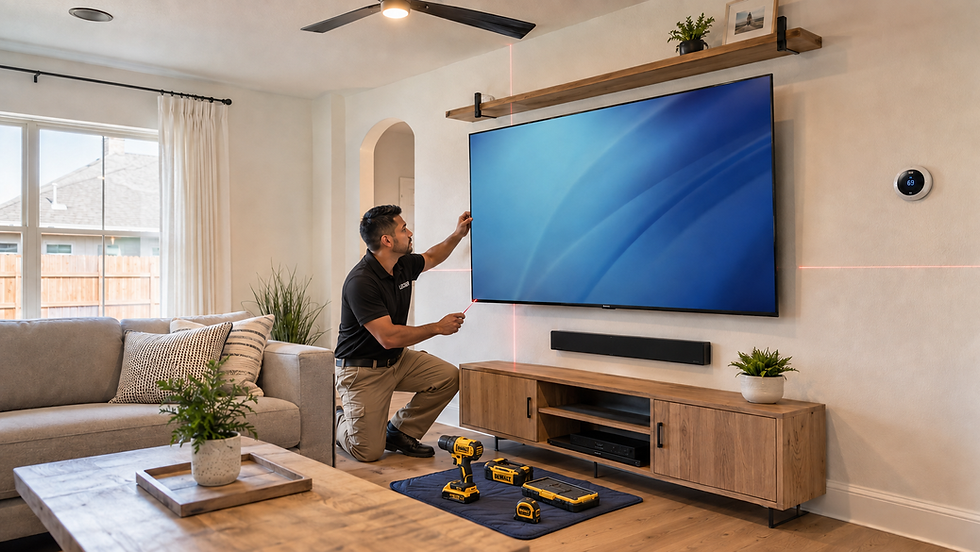
At LECSER, a professional TV mounting service begins before the first hole is drilled. The process includes evaluating the wall, confirming compatibility between the TV and mount, discussing the viewing position, planning cable and device placement, protecting the work area, and reviewing the completed setup with the customer.
The objective is simple: create an installation that feels secure, visually balanced, comfortable to watch, and appropriate for the room.
What Is Included in a Professional TV Installation?
The exact scope depends on the television, wall construction, bracket, accessories, and cable concealment plan. A complete installation may include:
Reviewing the TV size, weight, VESA pattern, and manufacturer requirements
Identifying wood studs, metal studs, concrete, block, brick, or another mounting surface
Confirming that the bracket is rated for the television and intended wall type
Recommending a comfortable mounting height and viewing angle
Accounting for furniture, soundbars, windows, glare, outlets, and room layout
Installing and leveling the wall mount and television
Planning visible, surface mounted, or in wall cable management
Mounting compatible soundbars, shelves, and accessory brackets
Connecting streaming players, cable boxes, game consoles, and audio equipment
Testing the screen, inputs, audio, remote controls, and connected devices
Cleaning the work area and reviewing the finished installation
Not every project needs every service. The value of professional planning is that the installation method is selected for the actual room rather than based on assumptions.
Why Precise TV Placement Matters
A screen can be securely mounted and still feel wrong if it is too high, off-center, affected by glare, or disconnected from the furniture below it. Good placement considers both comfort and design.
For many rooms, seated eye level is the best starting point. The center of the screen should generally remain close to the viewer's natural line of sight, then be adjusted for the size of the TV, seating distance, furniture, fireplace, and preferred viewing position.
Before installation, LECSER considers:
The primary seating area
The height and depth of the sofa or bed
Screen size and viewing distance
Windows, lamps, and reflected light
Media consoles, fireplaces, shelves, and artwork
Soundbar position and spacing
Whether the TV will remain fixed or move on an articulating mount
These details help the screen feel integrated into the room instead of simply attached to the wall.
Choosing the Right TV Mount
The best bracket is not automatically the most expensive or the one with the greatest range of motion. It must match the TV, wall structure, viewing needs, and desired appearance.
Fixed TV Mounts
A fixed mount holds the TV close to the wall and creates a clean, low-profile appearance. It is often a good choice when the seating position is directly in front of the screen and easy access behind the TV is not required.
Tilting TV Mounts
A tilting mount allows the screen to angle downward. This can help when the TV must be installed above normal eye level or when slight angle adjustment is useful for reducing reflections.
Full-Motion TV Mounts
A full motion or articulating mount can extend, swivel, tilt, and retract. It is useful for open floor plans, corner installations, multiple seating areas, and spaces where access behind the TV matters. Because extending the screen increases leverage on the wall, the wall structure and attachment method require careful evaluation.
Flush and Manufacturer-Specific Mounts
Gallery style televisions may use proprietary or model specific mounting systems. The supplied mount, rear clearances, cable connections, recessed-box position, and manufacturer instructions all affect the final result. A generic bracket should not be assumed to work simply because it fits a similar screen size.
Gallery Style and Art TV Installation
Modern televisions can function as both screens and design elements. Models such as Samsung The Frame and The Frame Pro, the LG OLED evo G-Series, TCL NXTVISION/NXTFRAME, and Hisense CanvasTV are designed to achieve a slim, art inspired presentation.
Installing these displays correctly involves more than getting the TV level. The installer may need to plan for:
A supplied or proprietary low profile wall mount
The exact cable exit location behind the screen
A recessed media box that does not interfere with the mount
External connection boxes and their ventilation requirements
Power availability at the correct location
Frame, bezel, or edge clearances
A wall that is sufficiently flat for a close to wall finish
For example, Samsung models may use an external One Connect or Wireless One Connect system depending on the model, while some TCL art TVs use a dedicated mounting system instead of a standard VESA arrangement. Product requirements should therefore be confirmed by exact model number before drilling or placing a recessed box.
Wire Concealment and Recessed Media Boxes
One of the biggest differences between basic TV hanging and a finished installation is cable planning. Even a perfectly centered television can look incomplete when power, HDMI, network, and accessory cables hang below the screen.
Depending on the wall and equipment, cable-management options may include:
Paintable surface raceways
Low voltage pass through plates
Listed in wall power and cable management kits
New or relocated recessed receptacles where permitted
Recessed media boxes for streaming devices and excess cable
Cable routing through accessible cabinets or media consoles
Organized connections for a soundbar, game console, cable box, or AV receiver
Power and low-voltage signal cables are not interchangeable. An ordinary TV power cord or extension cord should not simply be dropped inside a wall. The installation must use products and wiring methods suitable for the intended application and comply with applicable local requirements. Electrical work should be completed by a qualified professional whenever required by local law or the project scope.
A recessed box also needs to be selected and positioned carefully. If it is too shallow, too small, or placed where the bracket must sit, the TV may not retract fully. Equipment inside the box must also have adequate space, cable bend radius, signal access, and ventilation.
Soundbars, Streaming Devices, and Accessory Integration
A clean television installation should account for the complete entertainment system not only the screen.
LECSER can plan the placement and connection of compatible equipment such as:
Soundbars and attach to TV soundbar brackets
Apple TV, Roku, and Amazon Fire TV devices
Cable and streaming receivers
PlayStation, Xbox, and other gaming systems
AV receivers and HDMI switching equipment
Floating shelves and media console connections
External connection boxes supplied with certain televisions
Accessory placement affects remote performance, Wi Fi reception, ventilation, service access, and cable length. Hiding a device is useful only when the system remains reliable and easy to maintain.
Fireplace TV Mounting
Mounting a television above a fireplace requires more evaluation than a standard drywall installation. The technician must consider the wall structure, fireplace type, heat exposure, mantel depth, viewing height, cable route, and potential obstructions behind the finish.
Brick, stone, tile, and manufactured veneer are not interchangeable mounting surfaces. In many fireplace installations, the visible finish is not the primary structural support. The correct attachment point may be framing, masonry, concrete, or an approved backing system behind the surface.
The TV manufacturer's environmental limits and the fireplace manufacturer's clearance requirements should also be respected. If the proposed location exposes the television to excessive heat or produces an uncomfortable viewing angle, a different location or mounting approach may be the better recommendation.
Mounting on Brick, Concrete, Stone, or Tile
Challenging surfaces require more than a masonry bit and a box of generic anchors. The correct method depends on what the wall is actually made of and what lies behind the visible finish.
A professional assessment may consider:
Solid concrete versus hollow concrete block
Structural brick versus brick veneer
Natural stone versus manufactured stone veneer
Tile thickness and the substrate behind it
Anchor type, diameter, embedment, and edge distance
The position of mortar joints and possible cavities
Dust collection and protection of nearby finishes
Concrete, brick, mortar, stone, and some tile products can generate respirable silica dust when drilled or cut. Proper work practices and dust-control equipment help protect the home and installation area.
Residential, Commercial, and Multi Screen Installations
Professional TV mounting can include more than a single residential screen. Offices, conference rooms, restaurants, fitness facilities, waiting areas, and entertainment spaces may require commercial displays, projectors, or multi screen layouts.
These projects may involve:
Large-format television mounting
Conference room display installation
Projector and projection screen installation
Digital signage displays
Four screen sports or entertainment walls
Multi-display video wall systems
Device storage, power planning, and cable distribution
A group of televisions displaying separate sources is different from a true video wall that presents one coordinated image. Video walls may require compatible commercial displays, mounting hardware with precision adjustment, signal distribution, control equipment, electrical planning, ventilation, and service access.
The Details Customers Remember
Quality is visible in the final alignment, but it is also reflected in the installation process. Homeowners remember whether the technician communicated clearly, protected the room, respected the property, organized the equipment, and left the area clean.
LECSER focuses on details such as:
Confirming the installation plan before drilling
Protecting floors, furniture, and nearby finishes
Keeping the screen and soundbar visually aligned
Preventing cables from being stretched, pinched, or exposed unnecessarily
Checking the mount's movement and clearances
Testing the connected equipment
Explaining how to operate and access the completed setup
Removing installation debris from the work area
The goal is not only to mount the TV securely. It is to leave the room looking finished and the customer confident in the setup.
The LECSER TV Mounting Process
Stage | What LECSER Evaluates |
Planning | TV model, bracket, viewing position, room layout, accessories, and desired appearance |
Wall assessment | Studs, masonry, surface finish, utilities, backing, and mounting limitations |
Placement | Height, center line, glare, furniture, soundbar spacing, and movement clearance |
Installation | Rated hardware, manufacturer requirements, leveling, attachment, and surface protection |
Cable management | Power, HDMI, data, device storage, ventilation, and future service access |
Final review | Screen alignment, mount operation, device testing, cleanup, and customer walkthrough |
Why Choose LECSER?
At LECSER, TV mounting is treated as a combination of technical installation, careful planning, and finish work. Every project has its own variables, from the wall structure and television model to the furniture, lighting, accessories, and expectations of the homeowner.
Whether the project involves a standard fixed mount, a full-motion bracket, a Frame TV, a soundbar, a recessed media box, a fireplace, a commercial display, or a multi screen setup, the service should be planned around the actual conditions—not a one size fits all checklist.
Appointment options, including same day service, may vary by location, project requirements, and technician availability.
Frequently Asked Questions
What is included in a professional TV mounting service?
A professional service generally includes reviewing the TV and mount, assessing the wall, recommending placement, installing and leveling the bracket and television, organizing agreed upon cables, testing connected equipment, and cleaning the work area. Recessed boxes, electrical work, specialty surfaces, soundbars, and additional devices may require separate services or materials.
Can LECSER mount a TV on brick, concrete, stone, or tile?
These surfaces can often support a television when the underlying construction is suitable and the correct hardware and installation method are used. The surface must be evaluated first because concrete, hollow block, structural brick, veneer, stone, and tile require different approaches.
Is in wall wire concealment safe?
It can be when the correct listed products and approved wiring methods are used for the wall and local requirements. Standard detachable power cords and extension cords should not simply be routed through wall cavities. Some projects may require a qualified electrical professional.
How high should a TV be mounted?
Seated eye level is usually the best starting point, with the center of the screen close to the viewer's natural line of sight. The final height should account for screen size, seating, furniture, soundbar placement, fireplace clearances, and the room's layout rather than relying on one universal measurement.
Can a cable box or streaming device be hidden behind the TV?
Often, yes. The decision depends on the device size, ventilation needs, power source, Wi-Fi or remote control performance, mount clearance, and future service access. A recessed media box or compatible device bracket may be appropriate.
Can LECSER install a soundbar with the TV?
Yes, compatible soundbars can often be mounted directly to the wall or attached to the television using an appropriate bracket. The best method depends on the TV, soundbar, wall, and whether the screen is fixed or articulating.
Do gallery style TVs require special installation?
Many do. Art TVs may include proprietary mounts, external connection boxes, unique cable paths, strict recessed box positioning, or nonstandard clearances. The exact model number should be reviewed before choosing the mount or preparing the wall.
More Than Hanging a Screen
A well-installed television should feel like part of the room. It should be secure, comfortable to watch, visually balanced, and supported by organized connections that remain practical after the technician leaves.
That is the difference between simply hanging a screen and delivering a complete professional TV mounting service.
Installation options depend on the television, mount, wall construction, building requirements, site conditions, and applicable local rules. An on-site assessment may be required before the final installation method is confirmed.


Comments